
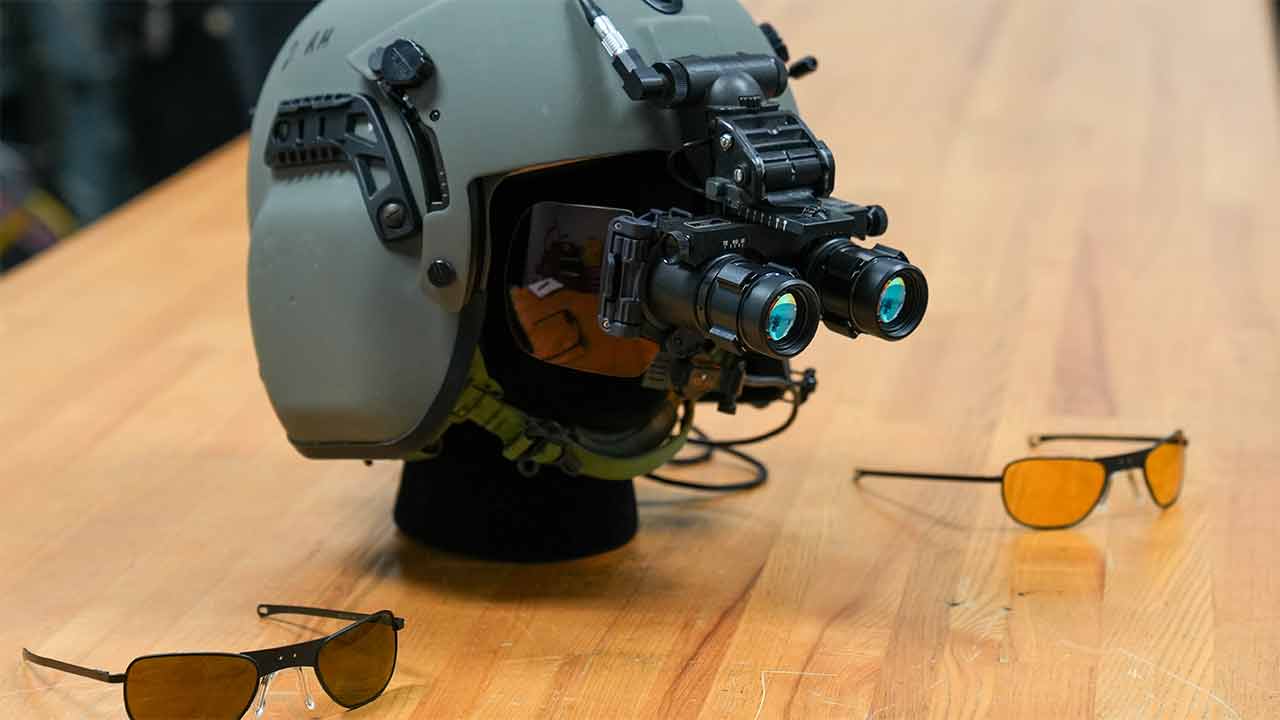
Service members at Robins Air Force Base in Georgia are on the front lines of a strategic effort to counter a growing threat to aviation: laser attacks against aircraft.
The project, led by the United States Air Force, includes the modernization of eye protection systems used by aircrews in response to the sharp rise in these incidents in recent years.
According to the Federal Aviation Administration (FAA), cases of laser illumination targeting aircraft have increased nearly 48% since 2020. In 2025 alone, more than 10,000 incidents were recorded across the United States. In addition to compromising flight safety, direct exposure can cause temporary or permanent eye injuries to pilots.
Next Generation: Block 3
To mitigate the risk, the Air Force Life Cycle Management Center, through the Human Systems Division at Wright-Patterson Air Force Base, is implementing a comprehensive upgrade to aircrew eye protection equipment through the Technology Insertion program — reviewed every five to seven years.
The new Block 3 family, developed in partnership with teams at Robins Air Force Base, includes six modular devices, such as:
- Day-use eyewear
- Night-use eyewear
- Ballistic equipment
- Visors compatible with night vision goggles
The technological advantage of Block 3 lies in a new optical dye capable of blocking a broader range of harmful laser wavelengths while allowing greater natural light transmission. The result is improved visual clarity without compromising protection.
+ Destroyer USS Mason Has Commanding Officer Relieved by U.S. Navy
Goal of 45,000 Units by 2029
The Air Force plans to distribute more than 45,000 devices by 2029. The initiative aims to safeguard both personnel and aircraft in an environment where laser attacks continue to rise.
Experts note that while many of these incidents originate from civilians and are considered federal crimes, the operational impact is significant — potentially forcing go-arounds, delays, and even mission cancellations.
The new eye protection system represents a direct technological response to the escalating threat, reinforcing aircrew safety during both domestic and international missions.
Source and images: af.mil. This content was created with the assistance of AI and reviewed by the editorial team.
